
The following is the first chapter from the book “Serial Killer Dark Psychology”
Chapter One
The Shadows Within: Understanding Dark Psychology
Defining Dark Psychology
Understanding is essential in a complex world of human interactions where motives clash and intentions collide. For us to understand the depths of dark psychology and its importance in forming a serial killer, we must first understand the obscure terminology surrounding it. Our journey as explorers begins by understanding these key terms, which will enable us to unlock this horrifying picture of the darkest corners of the human mind. These encompass manipulation, deceit, egoism, sociopathy, psychopathy, and narcissism. Each of these words is an important piece of this jigsaw puzzle, which, combined, gives a disturbing insight into the dark side of the human soul.

Manipulation is at the heart of dark psychology—a practice that has been there since ancient times. But what makes this survival technique evolve into an instrument for control? Manipulation is a wicked form where another person’s actions and thoughts are tactfully maneuvered without their knowledge or consent. The victim’s strings are invisible yet firmly held by them. Think about an influential leader who uses his/ her rhetorical powers to control multitudes while hiding behind false intentions.
Deceit is an important term in the vocabulary of dark psychology. It involves deliberately distorting or hiding the truth to benefit oneself. Deceit often goes together with manipulation, as the manipulator needs to be deceitful to maintain control over their target. Deceit can take different forms, like gaslighting, lying, or creating false stories.
Egoism is an excessive focus on oneself and one’s own interests. In dark psychology, this can lead to extreme selfishness and a lack of empathy for others. Egoism may also create a sense of entitlement, where the individual believes they are superior to others and deserves special treatment.
Sociopathy and psychopathy are closely related but have distinct differences. Sociopathy involves a disregard for the rights and emotions of others, while psychopathy is characterized by a lack of remorse and empathy. Both conditions involve a pattern of disregarding social norms and the rights of others.
Narcissism has become a more widely discussed topic in recent years, but it has long been studied in the field of dark psychology. Narcissism refers to an excessive focus on oneself and one’s own image, often at the expense of others. Narcissists have an inflated sense of their own importance and may manipulate and deceive others to maintain their grandiose self-image.
Understanding the terminology of dark psychology is crucial in unraveling the complex web of manipulation, deceit, and egoism that can lead to the creation of a serial killer. By familiarizing ourselves with these key terms, we can gain a deeper understanding of the effects of dark psychology and the devastating impact it can have on both the individual and those around them.
Chapter Two
The History of Dark Psychology
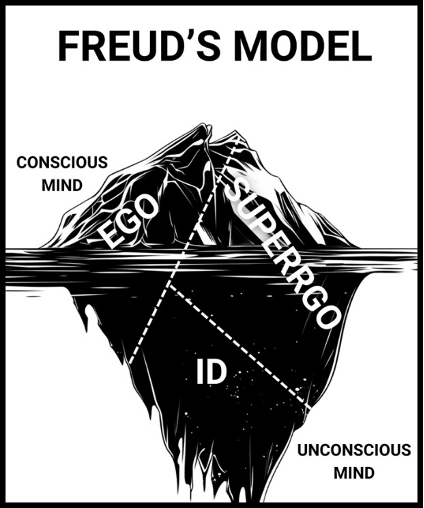
Photo from: Serial Killer Dark Psychology by True Crime Seven
The roots of dark psychology can be traced back to ancient civilizations. Historical records from ancient Egypt and Greece suggest an awareness of manipulative and deceptive behaviors among rulers, even though these actions were not yet recognized as psychological phenomena. Philosophers like Aristotle started exploring the darker aspects of human nature, setting the stage for further understanding. Over the centuries, the study of the human mind evolved, marked by important discoveries and theories. The Renaissance period ignited a deep interest in the human psyche, leading to the emergence of early psychological ideas. However, it wasn’t until the 18th and 19th centuries that the field of psychology as we know it today started taking shape.
The 19th century was a crucial time for progress. Figures like Sigmund Freud and Carl Jung delved into the unconscious mind, exploring the hidden desires and motivations that lay beneath the surface. Their groundbreaking work paved the way for future exploration into what would eventually be known as dark psychology.

Photo from: Serial Killer Dark Psychology by True Crime Seven
Imagine a diagram depicting Freud’s model of the psyche, with the id representing our deepest, darkest desires. Next to it, place Jung’s concept of the shadow self, the part of us we refuse to acknowledge. These visual aids not only clarify the concepts but also connect us to the past, illustrating the evolution of thought regarding the darker aspects of human nature.
It is important to note that the understanding of dark psychology is not a static concept but rather varies across cultures and regions. For example, in Eastern philosophies, the concept of yin and yang refers to the balance of light and dark within every individual. Meanwhile, Western thought has traditionally emphasized the separation of good and evil, which has influenced the development of psychological theories in those societies.
In recent decades, the field of psychology has exploded with new theories and research on dark personality traits. The emergence of the Dark Triad—narcissism, Machiavellianism, and psychopathy—has provided a framework for understanding the more sinister aspects of human behavior. This modern interpretation presents an expanded view of dark psychology, acknowledging the complexity of human nature.
The journey through the history of dark psychology is not without its obstacles. Debates rage over the moral implications of studying these darker aspects of the psyche, with critics arguing that such knowledge could be misused. Furthermore, the challenge of defining what constitutes ‘dark’ behavior continues to fuel debate among scholars. Yet, it is precisely these challenges that drive the field forward, forcing us to question, explore, and deepen our understanding.
The study of dark psychology looks to unravel the mysteries of why individuals commit acts that defy social norms. Though difficult, this quest is motivated by a small desire to understand the deep, elusive nature of man.

“Man is not truly one, but truly two,” wrote Robert Louis Stevenson in his exploration of duality, “Dr. Jekyll and Mr. Hyde.” This quote echoes through the ages, capturing the essence of our journey through dark psychology.
Using the principles of dark psychology, we may come to see the person smiling beside us in a new light, wondering what lies beneath their calm and friendly facade. It is a field that does not merely tell us about the dark traits of human nature but shows us through the actions and lives of those it studies.
Want more spine-chilling stories? Get our most shocking and horrific stories sent straight to your inbox, sign up for True Crime Seven’s newsletter and you can also receive a FREE copy of “The Briley Brothers” today.
Written by : Sajjad A


